What a Side-by-Side Comparison Can Teach Us About Polytunnel Design

Every so often, we receive a photo that tells a bigger story than we could ever write. Recently, one of our customers sent us a series of images showing a competitor polytunnel installed right next to an older Northern Polytunnels structure.
While it’s important to note that this is not a like-for-like comparison – the Northern Polytunnels model pictured is a previous-generation commercial tunnel, not our latest EasyBuild or EnviroPro Single Span design—it still raises some valid and important points about polytunnel design, durability, and safety.
Let’s take a closer look…
Timber vs All-Metal: A Familiar Weak Spot

The image above shows the bottom of the door frame on the competitor tunnel. Timber base rails, timber end frames, and timber door surrounds, all vulnerable to rot, warping, and structural weakening over time.
Compare this to our all-metal EasyBuild system, which completely eliminates timber from the frame. It’s not just about longevity, it’s about reducing maintenance, improving hygiene, and creating a structure that doesn’t let you down just when you need it most.
Mind Your Head: Safe Design Makes a Difference

Step inside the competitor tunnel and you’ll find this: a centre ridge bracket protruding downwards, complete with exposed bolts. In this case, the installer has added tape to soften the edges – a clear sign that it’s already been a hazard.
Our EasyBuild and EnviroPro Single Span systems are designed to maximise internal headroom and minimise injury risks. All fixings are safely recessed or kept flush to the frame, ensuring a safer working environment for growers of all ages and abilities.
Reinforcements or Red Flags?
Another internal feature that caught our attention is this small bar fixed parallel to the hoop, referred to by the manufacturer as a “storm bar.” Its purpose is to stop the hoop from rotating and prevent sections from pulling apart in adverse weather, in other words, it’s a workaround for structural weaknesses.
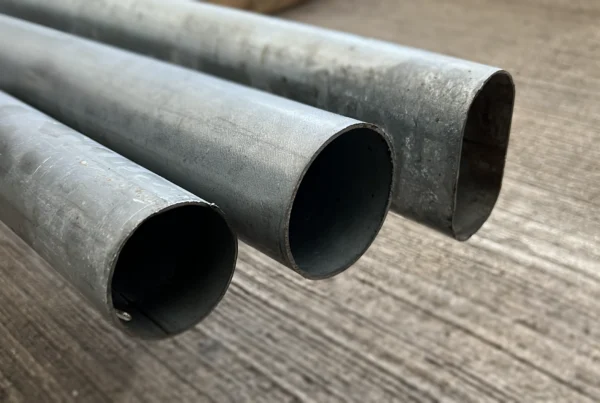
At Northern Polytunnels, we believe strength should be designed in, not bolted on. Our oval-profile steel hoops resist rotation naturally, and all joints are reinforced with intelligent bracketry and secure connections. There’s no need for a patch, because the frame doesn’t need fixing in the first place.
A Side-by-Side Story
Even from the outside, the differences are telling. The tunnel on the left – our older-generation model – still holds its shape, sits squarely, and has clearly stood the test of time. The tunnel on the right, although brand new, already reveals the compromises made when timber, brackets, and retrofit fixes are used in place of strong design and durable materials.
Polytunnels That Evolve With Growers’ Needs
The Northern Polytunnels tunnel shown here isn’t even our latest model. Our EasyBuild and EnviroPro Single Span tunnels now incorporate heavy-gauge steel, MAGNAtube galvanising, oval hoop profiles, and all-metal components across the board. This customer photo simply reinforces how our engineering has continued to evolve in the right direction.
When you choose a polytunnel, you’re not just buying a cover and a frame, you’re investing in a space that will shelter your crops, support your growing ambitions, and stand up to the British weather for years (or decades) to come.
That’s why we build our tunnels the way we do.
Want to Learn More?
Visit our EasyBuild Polytunnel range or explore our EnviroPro Commercial Tunnels to see how far things have come.